

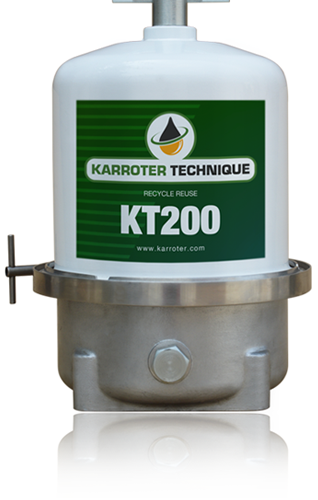
If you manage industrial machinery, you’ve likely faced this problem more than once: oil getting dirty faster than expected. Sludge builds up, filters clog, machines overheat, and suddenly you’re dealing with unplanned downtime, frequent oil changes, and rising maintenance costs. For many plants, oil contamination quietly eats into productivity and profits.
This is where centrifugal filtration makes a real difference. A centrifugal oil filter machine is designed to handle high-contamination environments where traditional filters struggle. In this blog, we’ll break down the advantages of centrifugal filtration, explain how it works, and show why industries with heavy-duty operations are increasingly choosing it as a long-term oil cleaning solution.
Why Oil Contamination Is a Costly Industrial Problem
Oil is the lifeline of industrial equipment. But once contaminants enter the system, problems start to multiply.
Common challenges industries face include:
- Frequent oil replacement, increasing operating costs
- Machine breakdowns caused by dirty oil and blocked passages
- Filter clogging, leading to pressure drops and downtime
Traditional cartridge or element-based filters work well in clean environments, but they struggle when oil carries heavy sludge, carbon, dust, or moisture. Filters clog quickly, require frequent replacement, and often force machines to stop during maintenance.
This is why many industries are turning to centrifugal filtration—a method that removes contaminants without consumable filters and supports continuous operation.
What Is a Centrifugal Oil Filter?
A centrifugal oil filter is an industrial oil cleaning system that separates contaminants from oil using centrifugal force instead of filter media. Rather than blocking particles in a cartridge, it spins the oil at high speed and separates impurities based on their density.
During operation, heavier contaminants such as sludge, carbon, dirt, and water are pushed outward and collected along the inner walls of the rotating bowl. Clean oil moves toward the center and exits from the bottom outlet, returning to the system for reuse.
Centrifugal oil filters are commonly used for cleaning lubricating oil, hydraulic oil, engine oil, gear oil, and industrial fuels such as diesel and furnace oil. This makes them suitable for a wide range of heavy industrial applications.
Centrifugal Oil Filter Working Principle
The working principle of a centrifugal oil filter is straightforward and highly effective.
Oil enters a rapidly rotating bowl or rotor. As the rotor spins at high speed, centrifugal force pushes heavier particles outward. Contaminants such as sludge, carbon, dirt, and even moisture settle along the inner walls of the rotor.
Key points of the process:
- Separation happens by density, not by blocking flow
- No filter media is required
- Clean oil stays at the center and flows back into the system
- Filtration can continue without stopping the machine
Periodic manual cleaning of collected sludge is all that’s needed, making the system reliable and low-maintenance.
Key Advantages of Centrifugal Filtration for Industrial Applications
Zero Consumable Cost
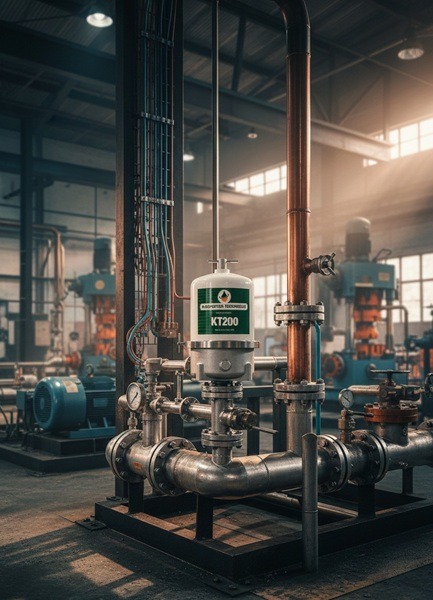
One of the most significant advantages of centrifugal filtration is that it works without cartridges or filter elements. This eliminates recurring consumable expenses entirely. Once installed, the system operates for years with only routine cleaning, making it a cost-effective solution for plants with continuous operation.
Extended Oil Life
Centrifugal filtration continuously removes contaminants that accelerate oil degradation. By keeping oil clean, it maintains viscosity and performance for longer periods. This reduces oil replacement frequency and is especially beneficial for industries using large volumes of expensive industrial oils.
Reduced Machine Downtime
Clean oil improves overall system reliability. Centrifugal filtration reduces clogging in pumps, valves, nozzles, and pipelines. Since filtration can be done offline or continuously, machines do not need to stop frequently for filter replacement, resulting in better production uptime.
High Filtration Efficiency
Centrifugal oil filters are highly effective in removing solid particles down to fine micron levels. Unlike cartridge filters, their efficiency does not drop under heavy contamination. This makes them ideal for dusty, high-sludge, and high-temperature environments.
Environment-Friendly Operation
By eliminating disposable filters and reducing oil waste, centrifugal filtration supports sustainable industrial practices. Less waste generation and longer oil life translate into a lower environmental footprint.
Karroter’s centrifugal oil filtration systems are designed specifically to solve challenges in heavy industrial environments
Advantages of Centrifugal Filtration Compared to Cartridge Filters
When compared directly, the differences are clear:
- Cost: Cartridge filters require ongoing purchases; centrifugal filters do not
- Maintenance: Frequent element replacement vs simple sludge cleaning
- Performance: Cartridge filters clog under heavy load; centrifugal filters keep separating contaminants
- Operation: Cartridge systems often require shutdowns; centrifugal systems allow continuous use
For industries with high contamination and long operating hours, centrifugal filtration is far more practical.
Where Centrifugal Filtration Delivers the Maximum Benefit
Centrifugal filtration is especially effective in industries such as:
- Cement plants – heavy dust and continuous operation
- Stone crushers – extreme contamination conditions
- Power plants – turbine and hydraulic oil reliability
- Marine engines and auxiliary systems
- Furnaces and boilers – furnace oil with high solid content
- Heavy manufacturing machinery
- Diesel engine oil systems (industrial gensets and marine engines)
In these environments, oil cleanliness directly affects safety, efficiency, and operating costs.
Why Centrifugal Filtration Is Preferred in Heavy-Duty Oil Systems
Heavy-duty systems generate more contamination due to:
- High operating temperatures
- Large oil sump capacities
- Continuous mechanical wear
In such applications, cartridge filters clog quickly and lose effectiveness. Centrifugal filtration, on the other hand, thrives in these conditions and provides long-term reliability with minimal intervention.
Common Misconceptions About Centrifugal Oil Filters
“They are complicated to maintain.”
In reality, maintenance is simple. Sludge is cleaned periodically without replacing parts.
“They are only for marine use.”
While popular in marine applications, centrifugal oil filters are widely used across cement, power, manufacturing, and heavy industries.
“They are not effective for fine particles.”
Modern centrifugal systems can remove very fine contaminants efficiently, even under high load.
Is a Centrifugal Oil Filter Kit Required?
In industrial applications, complete engineered filtration systems are preferred over add-on kits. A properly designed centrifugal oil filtration system is selected based on oil type, flow rate, sump capacity, and contamination level.
Correct sizing and application matching ensure reliable performance and long service life—something generic kits cannot deliver.
Why Karroter’s Centrifugal Oil Filtration Solutions Stand Out
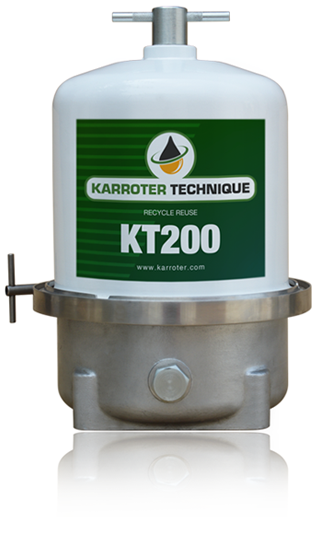
Karroter designs centrifugal oil filtration systems specifically for demanding industrial environments. With robust construction, multiple capacity models in the KT series, and custom skid-mounted solutions, Karroter systems are built for real operating conditions.
These solutions are proven across heavy industries where reliability, oil cleanliness, and uptime are critical.
Conclusion – When Should You Choose Centrifugal Filtration?
Centrifugal filtration is the right choice when you deal with:
- High oil contamination
- Long operating hours
- Frequent filter failures
- Downtime-sensitive operations
For cost-sensitive and uptime-critical industries, centrifugal oil filtration offers a reliable, efficient, and sustainable solution. If clean oil matters to your operation—and it always does—centrifugal filtration is a technology worth investing in.
FAQs
1. What is centrifugal filtration?
Centrifugal filtration is an oil cleaning process that removes contaminants using centrifugal force instead of filter media. The oil spins inside a rotor where heavier particles like sludge, carbon, and dirt move outward and collect on the rotor walls. Clean oil exits from the bottom outlet and returns to the system, ensuring continuous industrial oil filtration.
2. What are the advantages of centrifugal oil filters?
Centrifugal oil filters remove sludge, carbon, and solid contaminants without using replaceable filter elements. This reduces maintenance costs, extends oil life, and supports continuous filtration. They are widely used in industrial lubrication and hydraulic oil cleaning systems.
3. Why is centrifugation better than traditional filtration?
Centrifugation separates contaminants using centrifugal force instead of trapping them in filter elements. Unlike cartridge filters that clog and require replacement, centrifugal filtration allows continuous operation and works effectively in high-contamination industrial environments.
4. What are the advantages of a centrifuge?
A centrifuge improves oil cleanliness, reduces machine downtime, and removes sludge and solid contaminants efficiently. Since it operates without disposable filter elements, it lowers maintenance costs and supports long-term industrial oil purification.
5. What are the limitations of centrifugal filtration?
Centrifugal filtration is highly effective for removing sludge and heavy solid particles, but it may not remove extremely light particles or dissolved contaminants. In some systems, it is combined with other filtration methods to achieve higher oil cleanliness levels.
6. What are the two types of centrifuge?
The two main types of centrifuge used in industrial filtration are sedimentation centrifuges and filtration centrifuges. Sedimentation centrifuges separate contaminants based on density, while filtration centrifuges use filter media along with centrifugal force for separation.
